How Long Does It Take to Get a Visa? A Complete Timeline
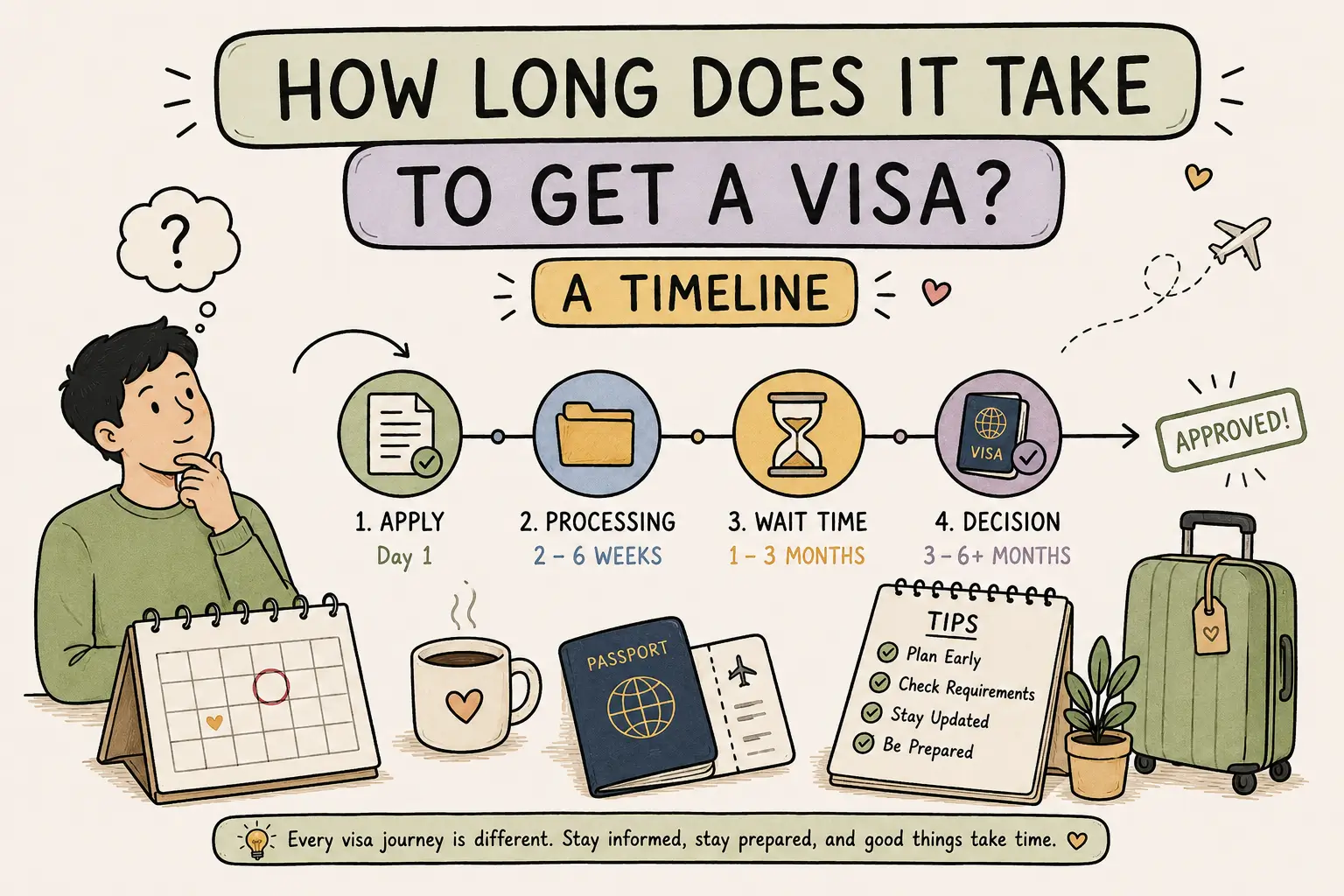
Ask this question a month before you need to travel and you’re probably already behind. A tourist visa can come through in a matter of days in some countries. A student visa? Usually two to four months, sometimes more, and that catches a lot of people off guard.
This article is for informational purposes only and isn’t professional advice. Visa rules shift by country, visa type, and season, so treat the numbers below as planning estimates, not promises.
There isn’t one clean answer to how long does it take to get a visa. It depends on the visa type, the country you’re applying from, and honestly, a fair amount of luck with how busy your local consulate happens to be that month. Below is what the timelines actually look like in practice, and where the real delays tend to come from.
Why Visa Processing Time Varies So Much
Here’s the thing nobody tells you upfront: visa processing time isn’t a single number, it’s a chain of steps, and each link in that chain runs on its own clock. A tourist visa might just need a form, a fee, and a short interview. A student visa needs a school to issue paperwork first, then a government agency to review it, then a consulate to actually schedule you.
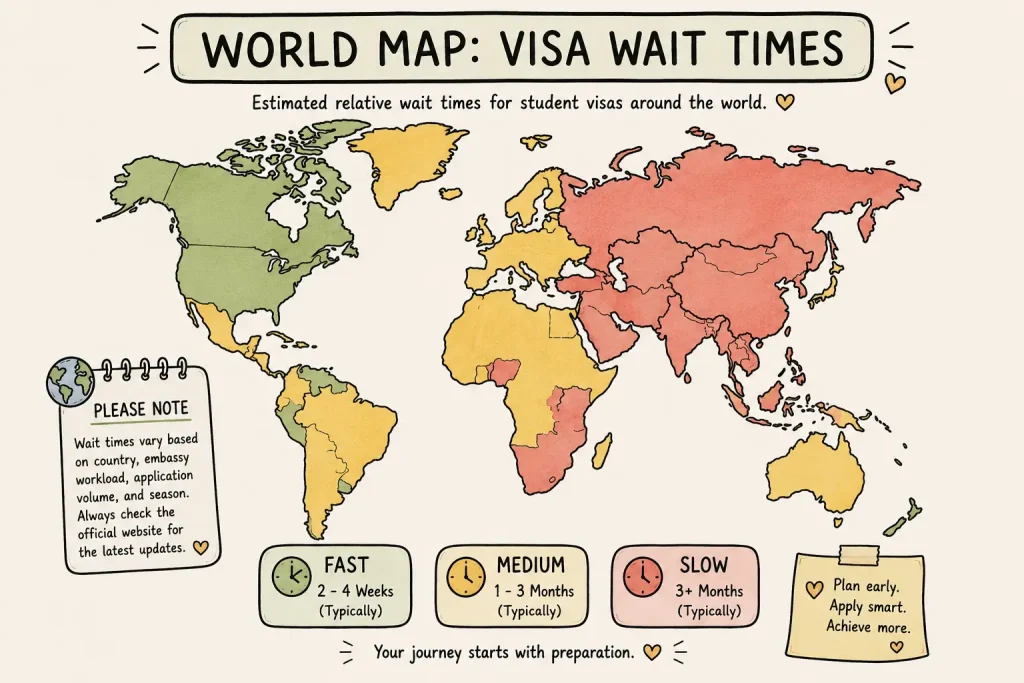
And where you’re applying from can matter more than the visa type itself. Consulates in smaller cities sometimes book interviews within a week. Meanwhile, high-demand posts in places like New Delhi, Lagos, or Manila have reported wait times past 90 days during peak season, according to State Department appointment data. Two people can apply for the identical visa in the identical month and end up months apart on timing, purely because of geography.
Your consulate matters more than any average you’ll find in a random blog post. Visa application time gets treated like a fixed number online way too often, when really it’s a range that moves with your paperwork, your location, and the calendar.
The Student Visa Timeline, Step by Step
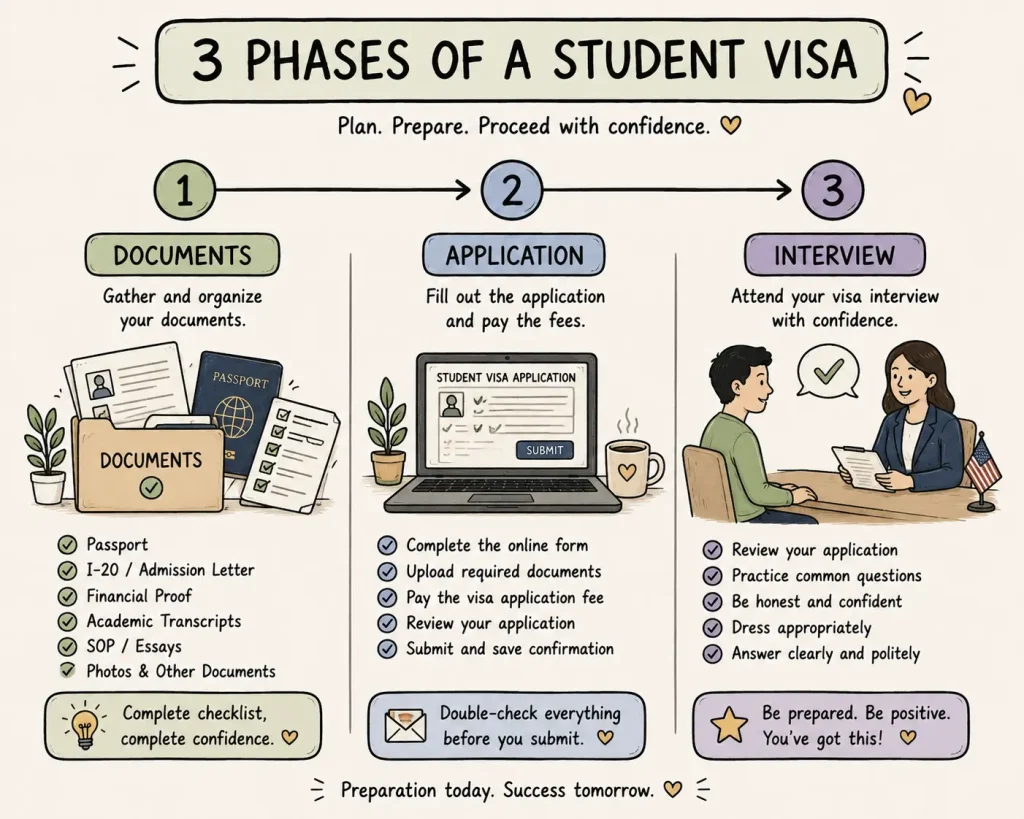
Most delays in a student visa timeline come from one of three places: your school, the paperwork itself, or the interview backlog. It helps to think of it less as “one process” and more as three separate waiting periods stacked on top of each other.
First, your school has to issue your acceptance and enrollment documents. For U.S. programs, that’s usually two to six weeks, though some institutions move faster than others depending on the season they’re dealing with admissions in.
Once you’ve got that paperwork, submitting your application and paying the fees is the easy part. It’s genuinely the fastest step in the whole process if your documents are already in order, sometimes done within days.
The interview is where things get unpredictable. For the U.S. F-1 visa, most students finish the entire process in four to twelve weeks after getting their enrollment paperwork. But that number stretches fast at busier posts. Interview wait times alone ranged from under two weeks in parts of Europe to well over 90 days in parts of Asia and Africa during 2026’s peak season, per figures on travel.state.gov. A smaller share of applicants also get pulled into what’s called administrative processing, an extra security review with no fixed timeline. It can add a few weeks. It can add months. Nobody, including the applicant, gets a say in how long.
If you take one thing from this section, make it this: apply four to six months before your program starts. That cushion is what saves people, not luck.
How Long Does a Tourist or Visitor Visa Take?
Tourist and visitor visas move faster, generally, since there’s no sponsoring institution slowing things down and less paperwork overall. A lot of countries process a straightforward tourist application in five to fifteen business days once it’s submitted.
But processing time and total time aren’t exactly the same thing. If your destination requires an interview, you’re still waiting on appointment availability, and that swings hard with the season. Summer and major holidays mean more people traveling and applying, which means longer waits, not because processing itself slows down but because the line gets longer.
E-visas and fully online applications skip a lot of this. Some come back in a few days. Just don’t assume your destination works the same way as the one your friend visited last year, since the rules genuinely differ even between neighboring countries.
Work and Business Visas Sit in the Middle
“Work visa” is a broad label covering very different processes, so the timeline swings wide depending on which one you mean. A short business visa for meetings or conferences behaves a lot like a tourist visa: one to three weeks in many cases, nothing dramatic.
A full employment-based work visa is a different animal entirely. These usually need an employer to file paperwork first, sometimes months before the employee even touches a visa application. In the U.S., that can mean a labor certification step, then a petition through USCIS, and only after that a consular application. Depending on the category and country quota, the whole sequence can run from several months to over a year.
If you’re in this boat, skip the general estimates and ask your employer’s HR or legal team directly. Sponsor-side delays are usually the real bottleneck, not the visa itself.
What Actually Slows Down Visa Application Time
A handful of things reliably stretch visa application time past the official estimate, and most of them you can actually do something about.
Paperwork problems top the list. Missing documents, numbers that don’t match across forms, financial evidence that isn’t clear, all of it can trigger a request for more information, which basically restarts part of the clock you were already watching.
Timing matters too. Consulates handling heavy student volume, especially in spring and summer, run longer interview backlogs than the same office would in a quieter month. Booking early, the moment your documents allow it, is one of the only levers you actually control here.
There’s also a factor most people don’t expect: field of study and country of origin can trigger extra scrutiny for certain visa categories, particularly STEM fields. You can’t control this one. But knowing it exists means you plan for a realistic timeline instead of assuming best-case.
Read next: [LINK: Student Visa Qualifications: What You Need to Know -> /education-career/student-visa-qualifications]
Tracking Your Visa Status Without Losing Your Mind
Once your application’s in, most countries offer an online portal for status updates. The trick is checking the right source, not checking constantly.
For U.S. visas, the State Department’s visa appointment wait times page updates weekly by consulate and is far more accurate than any blog’s general average, mine included.
If your case involves USCIS, like certain change-of-status applications, the USCIS case processing times tool gives you a current range for your specific service center. It won’t hand you an exact date. Nothing will. But it’ll tell you what’s realistic right now instead of what was realistic six months ago.
Check it every couple weeks. Checking daily just adds stress to something you can’t speed up anyway.
Frequently Asked Questions
How long does it take to get a visa for international travel?
It depends on the visa type and country, but many tourist visas process within one to three weeks, while student and work visas often take one to four months. Check the specific consulate’s current wait times before locking in travel plans.
How long is a student visa timeline from start to finish?
Most F-1 student visa applicants finish in four to twelve weeks after getting their enrollment documents. High-demand consulates push that to several months, so applying four to six months ahead of your program start is the safer move.
Can visa processing time be sped up?
Not really. Government processing times aren’t something you can pay or push to accelerate. Getting your paperwork right the first time is about the only thing within your control.
Why does visa application time vary so much by country?
Different consulates handle different volumes, and some require extra screening for specific fields of study or travel histories. A low-volume consulate will almost always beat a high-volume one, regardless of visa category.
What happens if my visa gets stuck in administrative processing?
It’s an extra review step with no set timeline attached. It can add weeks or months, and there’s no reliable way to check its status besides waiting or contacting the consulate directly.
Conclusion
There’s no clean, universal answer to how long does it take to get a visa. It’s a range, and that range depends on your visa type, your home country, and whatever season you happen to be applying in.
Next step: check your specific consulate’s current wait times on travel.state.gov before you lock in any travel or enrollment plans, and apply as early as your paperwork allows you to.