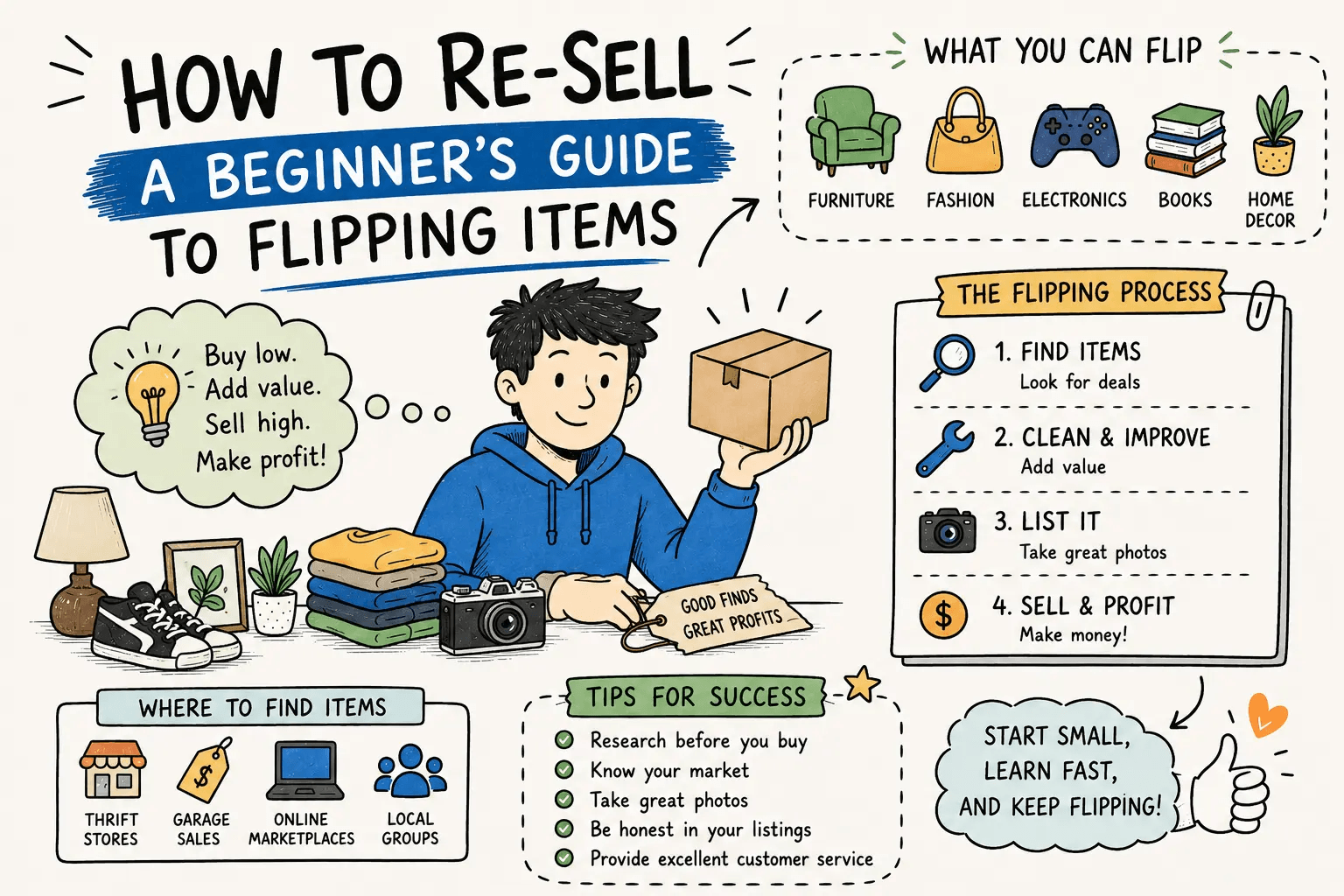
How to Resell: A Beginner’s Guide to Starting From $0
Reselling is buying things on the cheap (usually used) and selling them for a profit. Pick a category you know (name-brand clothing, small gadgets, etc), buy at thrift stores or clearance racks, sell on eBay, Poshmark, Facebook Marketplace, or any other site, and price according to actual sold listings.
Reselling is one of the easiest methods to make additional money, and for good reason. You don’t need a warehouse, a big budget or particular training. All you need is a decent eye, a smartphone and a little patience.
If you’re wondering how to resell without much money or experience, this article takes you through everything a novice needs to know about reselling for beginners and flipping items for profit.
You will learn what to buy, where to sell it, how to market your finds, and what to avoid. By the end, you’ll have a clear method to make money from those second hand deals.
What is Reselling? And Why Does It Still Work?
Reselling means buying stuff cheap and selling it for more. Resellers find undervalued products in thrift shops, garage sales, clearance racks, or estate sales. They sell those commodities to buyers who will pay market value for the goods.
And it works because access to and information are not evenly dispersed. A vintage jacket hanging on a thrift store rack for $6 can be worth $60 to the right buyer. Your responsibility as a reseller is to take that item to that buyer.
One of the attractions is the low barrier to entrance. If you’re learning how to resell, you can start with what you have and add to it when you are ready. Consider it a weekend hobby or a full-time enterprise, whatever you’d want.
What Do You Need to Begin Reselling? (Beginners Check List)
You can start reselling with way less than you think. If you’re learning how to start reselling, here’s the essential checklist:
- Decent camera smartphone that provides nice product photos
- A free selling account on at least one of the following platforms (eBay, Poshmark or Facebook Marketplace)
- Essential shipping items such as poly mailers, cartons, and packing tape
- A small starting budget ($20-$50 is adequate for your initial flips)
- A postal scale or kitchen scale to correctly measure products and determine shipping
- A basic monitoring system, even a spreadsheet, to keep track of what you paid and earned
That is truly it. For reselling for beginners, these basics are enough to get started, and everything else can be added as you grow.
If you’re interested in tools that can help make the process easier, check out our guide to side hustle applications for beginners.
What Are the Best Items to Resell for Beginners?
Getting the appropriate categories from the start is the difference. Some sell quickly and are easy to ship, but others tie up your money or arrive broken.
These best items to resell for beginners seem to have the best blend of demand and low risk:
Brand-name clothing and shoes: Brands like Nike, Levi’s and Carhartt keep their worth and have devoted buyers.
Vintage goods: Retro apparel, décor and accessories often command a premium with collectors.
Small electronics: Phones, gaming equipment, and gadgets are compact, valuable, and easy to ship.
Toys and collectibles: Toys that are out of production, action figures, and trading cards can fetch premium prices.
Well-known names in kitchen equipment: cast iron pans, compact gadgets and excellent cookware sell reliably.
If you are a newbie, do not buy big furniture or breakable glassware. Furniture is difficult to store and ship, and fragile glass objects are easily broken in transit. Both can eat away at your profit and your patience.
For reselling for beginners, starting with smaller, easy-to-ship products usually keeps the risk lower while you learn what sells.
Best Platforms & Apps To Sell Your Stuff
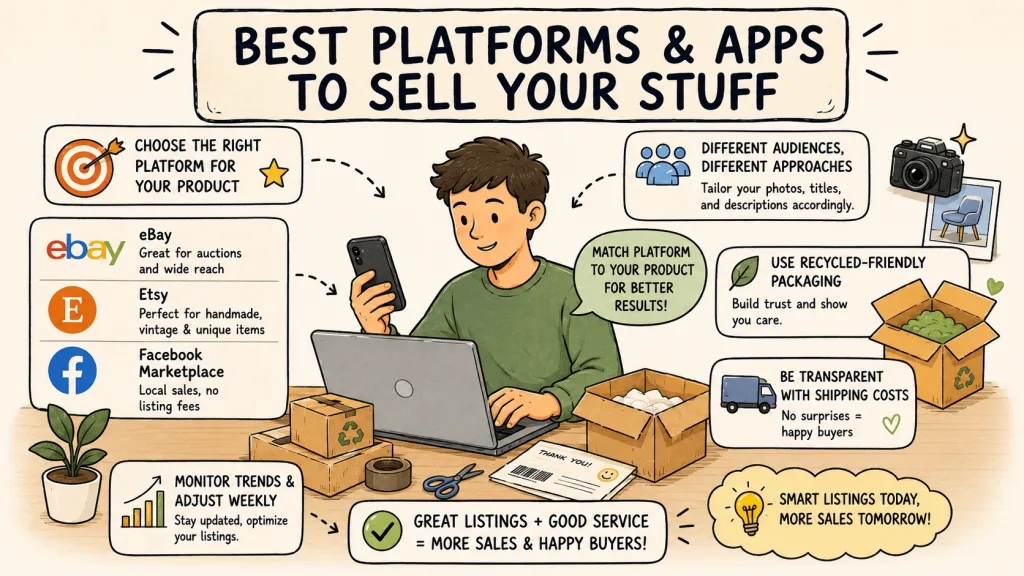
Depending on the site you use, who sees your listing and how much you keep after costs will vary. Each alternative has its merits, so match platform to your product.
Platforms like eBay, Etsy, and Facebook Marketplace each cater to different audiences, so tailor your photos, titles, and descriptions accordingly.
Start with clear, recycled-friendly packaging and transparent shipping costs to build trust and encourage repeat buyers. Monitor trends and adjust listings weekly for optimal results.
eBay
eBay is the titan of all purposes. Whatever it is you want is fine here, from electronics to collectibles to clothing. It has a large audience and the auction model works well for rare or hard-to-value objects as buyers may help push the price up.
If you want to get the most people, go with eBay.
Poshmark, Depop
Poshmark and Depop are for fashion. Depop is more youthful and trendy, focused on vintage and streetwear. While Poshmark is better for name-brand and mainstream apparel.
Both also have social, community-oriented aspects that encourage active vendors. Choose these if you are into clothes.
Facebook Marketplace
Facebook Marketplace is great for selling locally. Larger products do not have shipping issues, there are no seller fees for local pick ups and buyers are typically local.
Marketplace is a good option for large items or to avoid delivery altogether.
Cross-Listing Approach
Don’t restrict yourself to a single platform. Cross-listing is when you post the same item to various platforms at the same time, which gives you a better chance of a speedy sale.
Just make sure to take a listing down everyplace after it sells, so you don’t unintentionally sell the same item twice.
Pricing Items To Sell
It is in pricing that beginners win or lose their profit. The aim when flipping items for profit is to price competitively while still leaving yourself a worthwhile margin.
Pricing not only affects your profit margins but also shapes buyer perception of the item’s value. If priced too low, buyers might assume the item is of poor quality or flawed.
Conversely, setting the price too high might deter potential buyers who perceive it as overpriced compared to similar listings.
View Sold Listings
Don’t presume the value of an object. Search for it.
Use eBay to filter your search. This way you can see what people actually paid for an item, not just what the vendors want. Filter by “Sold Items“.
This provides you a true market pricing and helps you identify pricey postings that never sold.
Calculate Shipping & Fees
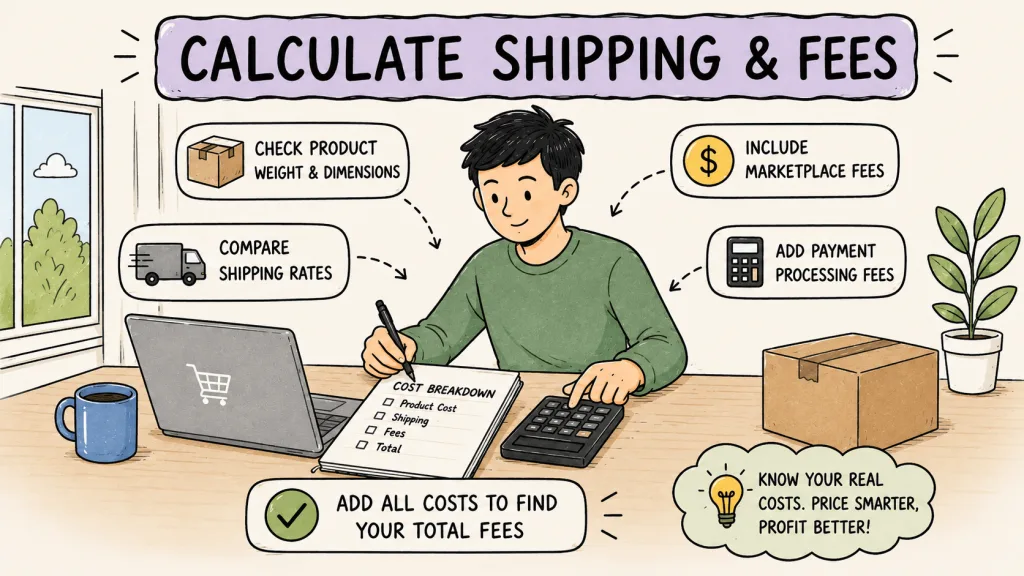
Your sale price is not your profit. Platform fees vary by marketplace, product category, and account type, so check the current fee schedule before pricing an item.
Minus the platform fees, delivery, and what you paid for the item before listing. What’s left is your true profit.
If that amount is too thin, change your pricing or pass on the flip. This is one of the most important habits when flipping items for profit.
Common Mistakes to Avoid for Beginners
What are they? A few mistakes are the cause of the failures of a small group of resellers – mistakes that can be avoided.
Watch for these:
Buying the hype, not the research. A “great deal” is only terrific if it sells. Do not buy and then check sold listings. Check sold listings before you buy.
Bad photography. Blurry dark pics harm sales. Utilize natural light, a clean background, and numerous angles.
Sloooow shipping. Vague descriptions. Ship swiftly and be truthful in your descriptions, warts and all. Both help create the ratings that promote future sales.
No profit tracking. If you don’t keep track of what you spend and what you earn, you won’t know if you’re genuinely making money. A basic spreadsheet will do.
FAQs: How to Sell Items Online
How to Start Reselling With No Money
Begin by selling stuff you currently own, including clothes, electronics, or home items you no longer use. Re-invest that first little earnings into stock. You may even start with absolutely no upfront cost by checking out thrift stores, clearance racks and free stuff on Facebook Marketplace.
What is the easiest app to resale on?
Of the sites, Poshmark is the easiest to use for beginners, thanks to its easy layout and prepaid shipping labels.Most widespread audience for stuff is on eBay.Facebook Marketplace is tough to match for local, no-shipping sales and many newbies start with one and grow from there.
How much can you make flipping?
Earnings range widely. Casual resellers can earn $100 to $500 a month as a side income.Serious sellers that treat it like a business can make several thousand dollars a month.Your income is based on how much time you put in, your sourcing ability and your categories.
Do I Need a Business License to Resell?
It is contingent upon where you are and what you sell.You normally don’t need a license for casual, infrequent sales, but regular income may be taxed and require registration.
Income from sales is usually taxable, so see IRS Small Business and Self-Employed Tax Center instructions and your local requirements.
How to Vet Products Before Buying to Resell
Check for damage, test the gadgets if you can, and make sure branded goods are genuine.
Then go to sold items on eBay to confirm actual demand and pricing.
Stained, broken, or no sales history on an item, therefore usually not worth the risk.
Start Flipping Items Today
The best resellers are not the ones with the biggest budgets, they are the ones that are the most curious and consistent.
If you’re still learning how to resell, pick one niche you know, master one platform to begin with, and keep your first few flips tiny and low risk.
Track every purchase and sale to determine what’s working. The best way to learn is via practice.
Take some clear shots, grab a few objects from around your house and list it this week. Your first sale is closer than you realize.