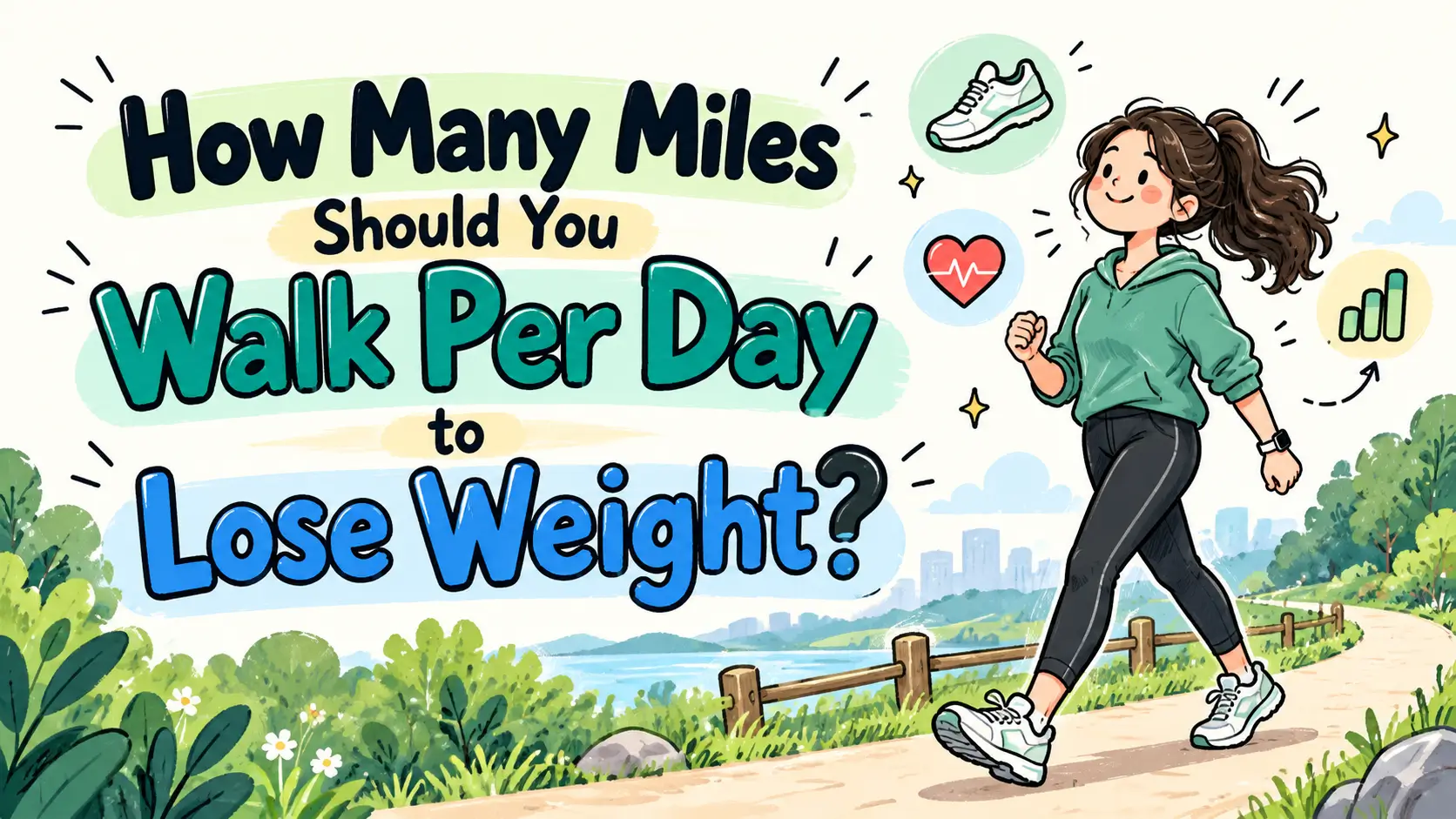
How Many Miles Should You Walk Per Day to Lose Weight?

Most people need to walk 5 to 8 miles a day. That creates the calorie deficit needed for noticeable weight loss. The exact number depends on your weight, pace, and diet.
There’s no single magic mileage that works for everyone. But the math behind it is more predictable than most fitness content admits.
Here’s the problem. A lot of walking content throws out a generic “10,000 steps” number. Others bury you in complicated calorie formulas.
Neither tells you what applies to your body. This guide breaks down how many miles you should walk per day and what affects that number. You’ll also learn how walking for weight loss works and how to build a walking to lose weight routine that actually sticks.
How Walking Actually Burns Calories
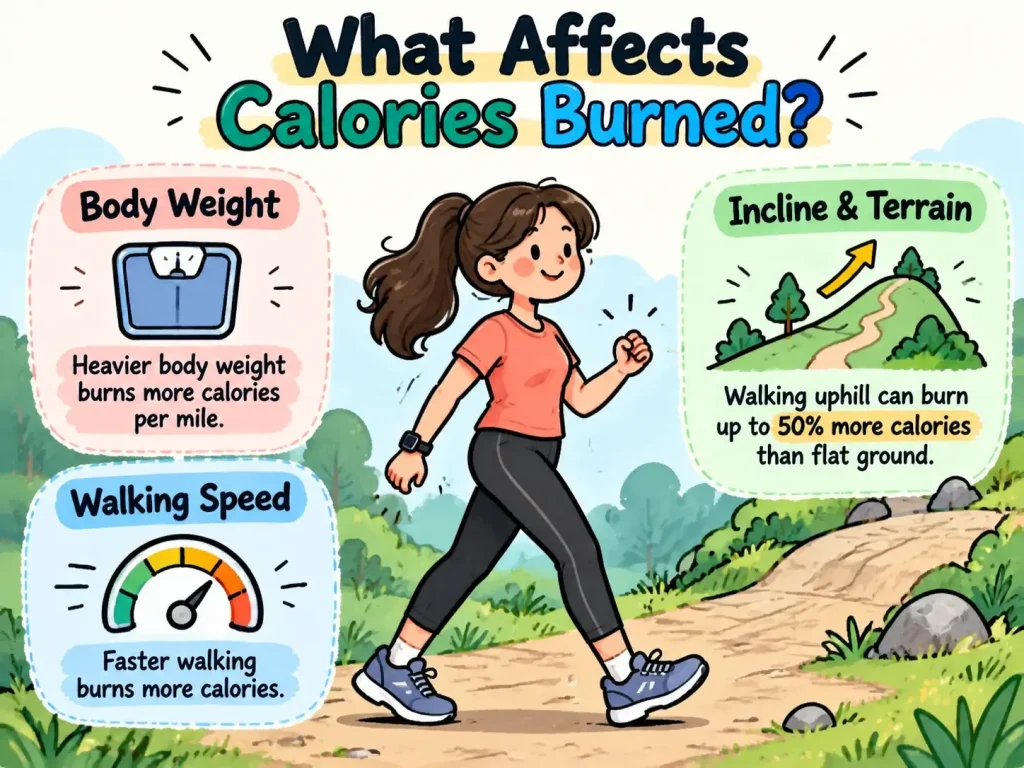
Walking burns calories because your body needs energy to move. The heavier you are, the more calories you burn per mile. Faster walking burns even more.
A rough rule of thumb: the average person burns 80-100 calories per mile. That’s at a moderate pace. Someone at 200 pounds burns more per mile than someone at 130 pounds.
More body weight means more energy required to move it. To lose one pound of fat, you need a 3,500-calorie deficit. That doesn’t have to come from walking alone.
Diet plays a massive role too. But walking for weight loss gives you a controllable, low-impact way to chip away at that number. Regular physical activity can help you use more calories and maintain weight loss.
Terrain and incline change the math as well. Walking uphill can burn 50% more calories than flat ground. Your body works against gravity with every step.
Wind resistance and uneven trails nudge the number higher too. Carrying a light backpack does the same. None of these are strictly necessary for walking to lose weight, though. Consistent distance and a sustainable calorie deficit matter more than making every walk difficult.
How Many Miles Should You Walk Per Day to Lose Weight?
The right number of walking miles per day depends on your weight, activity level, and diet. Here’s a general breakdown based on calories burned per mile.
| Body Weight | Calories Burned Per Mile | Miles to Burn 500 Calories |
| 130 lbs | ~65 calories | ~7.7 miles |
| 160 lbs | ~80 calories | ~6.25 miles |
| 190 lbs | ~95 calories | ~5.3 miles |
| 220 lbs | ~110 calories | ~4.5 miles |
That’s why recommended walking miles per day often fall somewhere around the 5–8 mile range for people trying to create a meaningful activity-based calorie deficit. Most doctors consider this pace safe and sustainable. That’s why 5-8 miles a day shows up so often.
If that sounds like a lot, remember it doesn’t need one walk. Splitting it into morning and evening walks works the same. Adding a lunch break stroll helps too.
Does Walking Speed Matter?
Yes, quite a bit. When you’re walking for weight loss, pace affects how much energy you use and how long it takes to cover the same distance. A brisk pace burns noticeably more calories than a casual stroll. Your heart rate and effort level climb with speed.
Casual pace (2-2.5 mph): Burns calories, but slowly. Good for beginners or recovery days.
Brisk pace (3.5-4 mph): The sweet spot for most people walking to lose weight. This elevates heart rate without requiring running.
Power walking (4.5+ mph): Burns significantly more calories per mile. It takes more effort and isn’t necessary for most people.
You don’t need to power walk every session. A consistent brisk pace, most days weekly, beats sporadic intense walks. Those often leave you too sore to keep the habit.
Miles vs Steps: Which Should You Track?
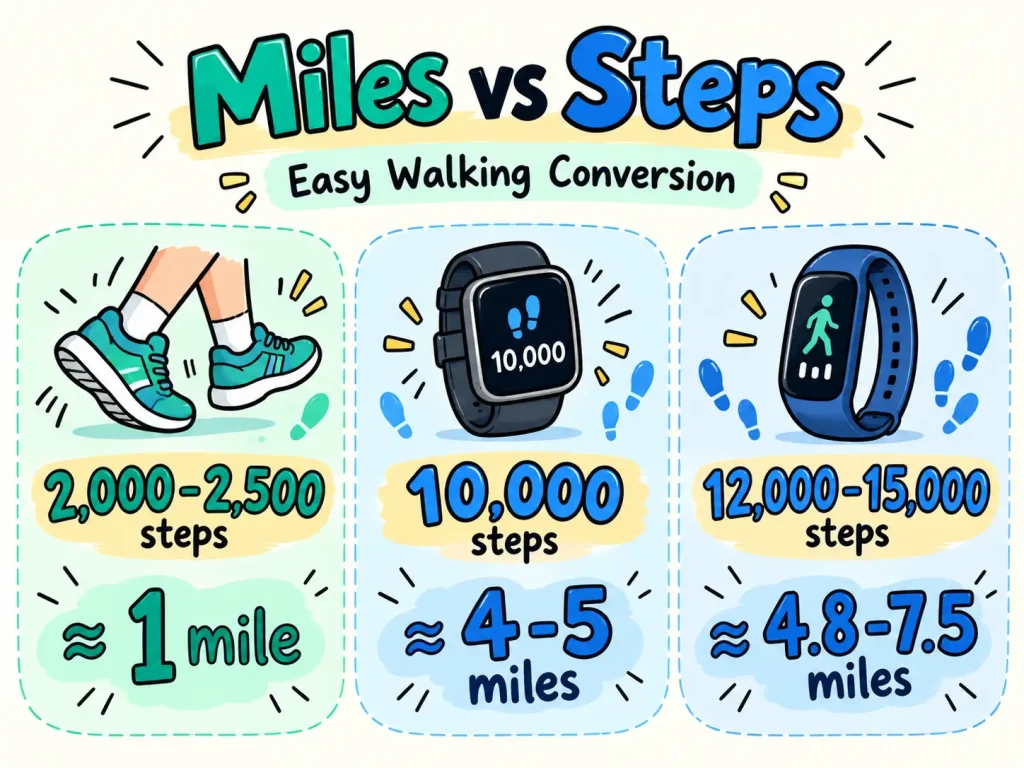
If you’re tracking walking miles per day, steps give you another easy way to measure the same activity. They’re just different units. On average, 2,000-2,500 steps equal about one mile.
This depends on your stride length and height. The popular “10,000 steps a day” target roughly translates to 4-5 miles. That lines up close to the lower end of the weight-loss range.
If you’re already tracking steps, you don’t need to switch. Just know that 10,000 steps is a solid baseline. Pushing toward 12,000-15,000 steps gets you closer to the higher end.
How to Build a Walking Habit That Actually Sticks
Hitting big mileage numbers only matters if you sustain it. Here’s how to make it realistic.
Start where you are. If you currently walk 1-2 miles, jumping to 8 risks burnout. Add roughly half a mile weekly instead.
Break it into chunks. A 20-minute walk before work adds up. So does one at lunch and one after dinner. It won’t feel like one grueling session.
Use terrain to your advantage. Walking on an incline or uneven ground burns more calories per mile. Flat pavement burns comparatively less.
Track your progress. A basic phone app or fitness tracker keeps you honest. Perceived effort often doesn’t match actual distance covered.
Many apps also log pace and elevation automatically. Reviewing weekly trends helps you spot plateaus early. Small adjustments, like adding a hill route, can restart progress.
Pair it with strength training. Walking alone burns calories, but strength sessions preserve muscle. Adults should also include muscle-strengthening activity at least two days per week. This keeps your metabolism working in your favor during a deficit.
Give yourself a realistic timeline. Building from 2 to 7 miles daily often takes 6-10 weeks. Rushing that timeline is the top reason people quit or get injured.
Celebrate small wins along the way, too. Hitting a new weekly mileage total counts as real progress. It keeps motivation high during the slower early weeks.
Does Treadmill Walking for Stomach Fat Actually Work?
A lot of searches around this topic focus on belly fat. It’s worth setting expectations here. Walking burns calories from stored fat throughout the body.
It doesn’t target stomach fat specifically. Spot reduction isn’t something the body actually does. This holds true no matter how the exercise gets framed.
That said, a consistent walking routine reduces overall body fat over time. Stomach fat is often one area that responds. A treadmill’s advantage is convenience and consistency.
Incline settings let you increase intensity without outdoor terrain. You can also walk regardless of weather conditions.
If belly fat is your main concern, walking works best as one piece. Sleep quality, stress levels, and overall diet composition all matter. These factors influence where the body stores and releases fat.
Nobody can promise exactly which area slims down first. But consistent walking paired with those habits gives you the best realistic odds.
Patience matters here more than intensity. Chasing belly fat specifically often leads to frustration and quick fixes that don’t stick. A steady, sustainable routine outperforms any short-term trick.
Common Mistakes That Slow Down Results
Ignoring diet entirely. Walking 8 miles a day won’t offset a calorie surplus from food. The deficit has to be real on both sides.
Expecting linear weight loss. Water retention and hormones cause daily fluctuations. The scale won’t drop in a perfectly straight line.
Overdoing it too fast. Jumping to high mileage before your joints adjust causes problems. Shin splints or knee pain often derail the whole routine.
Skipping proper shoes. Worn-out or unsupportive footwear makes high-mileage walking uncomfortable. It also increases injury risk significantly.
Replacing walking shoes every 300-500 miles is a good rule. Worn cushioning fails to absorb impact properly over time. This small cost prevents bigger problems down the road.
FAQ
How many miles should you walk per day to lose weight fast?
Walking to lose weight works best when you combine regular activity with a modest calorie deficit from your diet. Combine that with a modest calorie deficit from diet.
Is walking 30 minutes a day enough to lose weight?
It can contribute, especially combined with diet changes. Though 30 minutes typically covers only 1.5-2 miles for most people.
How long does it take to walk a mile?
At a moderate pace, most people walk a mile in 15-20 minutes. A brisk pace brings that down to 13-15 minutes.
Can walking alone help you lose belly fat?
Walking helps reduce overall body fat, which often includes belly fat. But it can’t target fat loss in one specific area.
Do I need to walk every single day to see results?
No. Five to six days weekly works just as well as daily walking. Rest days help prevent overuse injuries, too.
The Bottom Line
There’s no single answer to how many miles you should walk per day. But 5-8 miles, combined with a reasonable calorie deficit, works for most people. This range stays realistic and sustainable.
Start where you’re at and build up gradually. Let consistency do the heavy lifting over time.