1400 Calorie Meal Plan: Proven 7-Day Guide
A healthy 1400 calorie meal plan splits your daily food into three meals and one or two snacks. It usually includes lean protein, vegetables, whole grains, and healthy fats. This calorie level can suit some people who want slow and steady weight loss under guidance.
Most meal plan articles list random recipes with no real structure. Others hand you a rigid plan that ignores what you actually like to eat. Neither one helps you build a habit that lasts.
This guide gives you a practical 1400 calorie diet meal plan that works as a structured weight loss meal plan for seven full days. You will also get simple tips to help you stick with it.
A quick note first. 1400 calories is low for many adults. This is especially true for active people. Talk to a doctor or a dietitian before starting any calorie restricted plan.
Is a 1400 Calorie Diet Plan Right for You?
Calorie needs are different for everyone. Age, height, activity level, and goals all play a role. A 1400 calorie meal plan is not right for every single person.
A 1400 calorie meal plan should match your lifestyle, activity level, and personal health goals rather than being followed just because it works for someone else.
Before starting a 1400 calorie meal plan, it is important to understand your personal calorie needs and activity level.
It often works best for smaller framed adults. It can also suit people with a lower activity level. Athletes and very active people usually need more food than this.
Pregnant and breastfeeding women should avoid low calorie plans. Anyone with a history of disordered eating should also avoid this kind of plan. Always check with a doctor first.
If 1400 calories feels too low for your body that is completely valid. Everyone’s needs are different. There is no single correct number for every person. Adjusting your portions is always an option.
Many dietitians start with your current weight. They multiply your body weight in pounds by 12 to 15 to estimate maintenance calories. Subtracting 300 to 500 from that number often creates a safe calorie deficit for slow weight loss.
These formulas are only a starting point though. Real results depend on watching how your body responds over a few weeks. Adjust the plan based on your hunger, energy, and progress.
What a Balanced 1400 Calorie Diet Meal Plan Looks Like
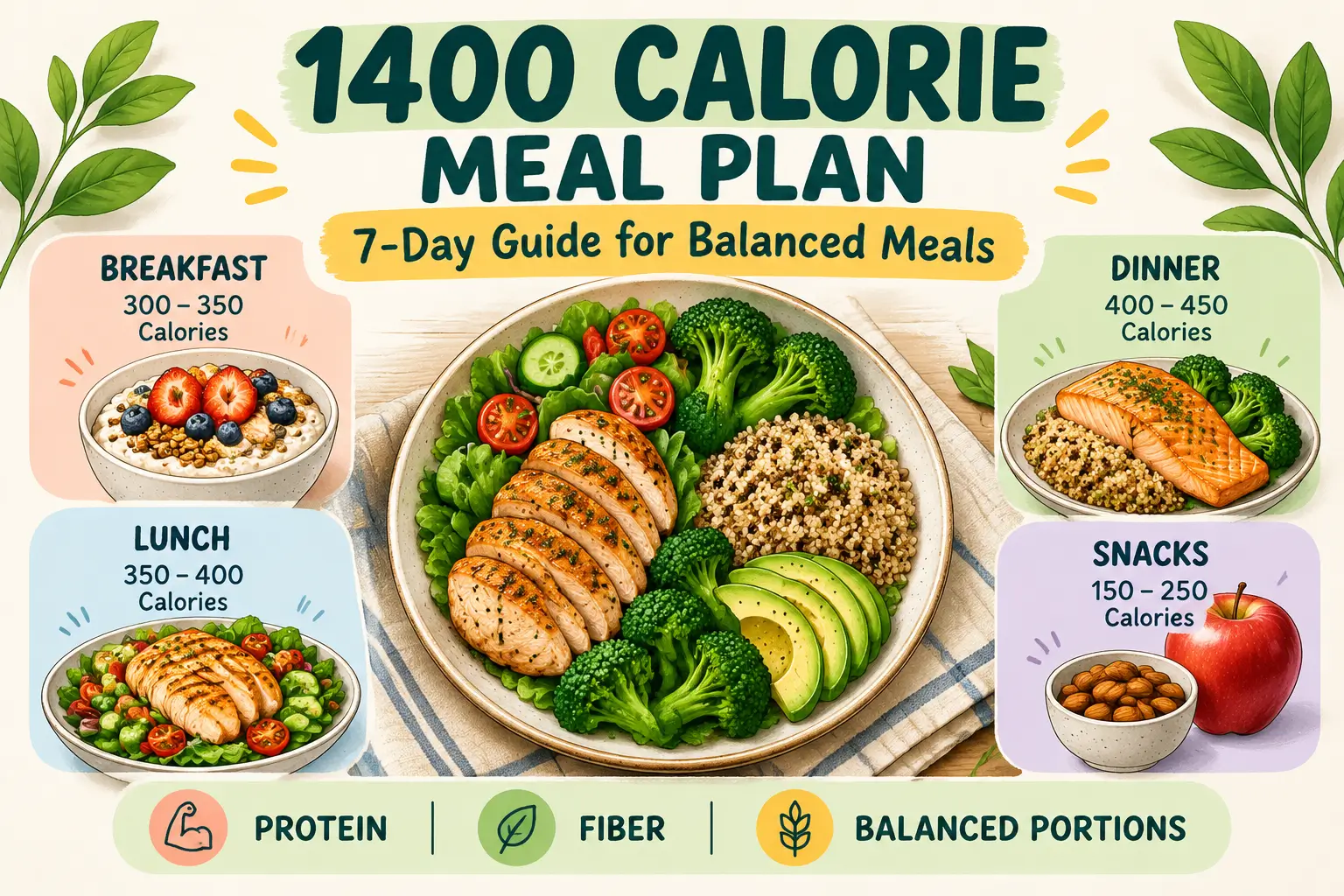
A well built day spreads calories evenly across meals. This helps manage hunger and keeps your energy steady through the day. Here is a rough breakdown that works for most people.
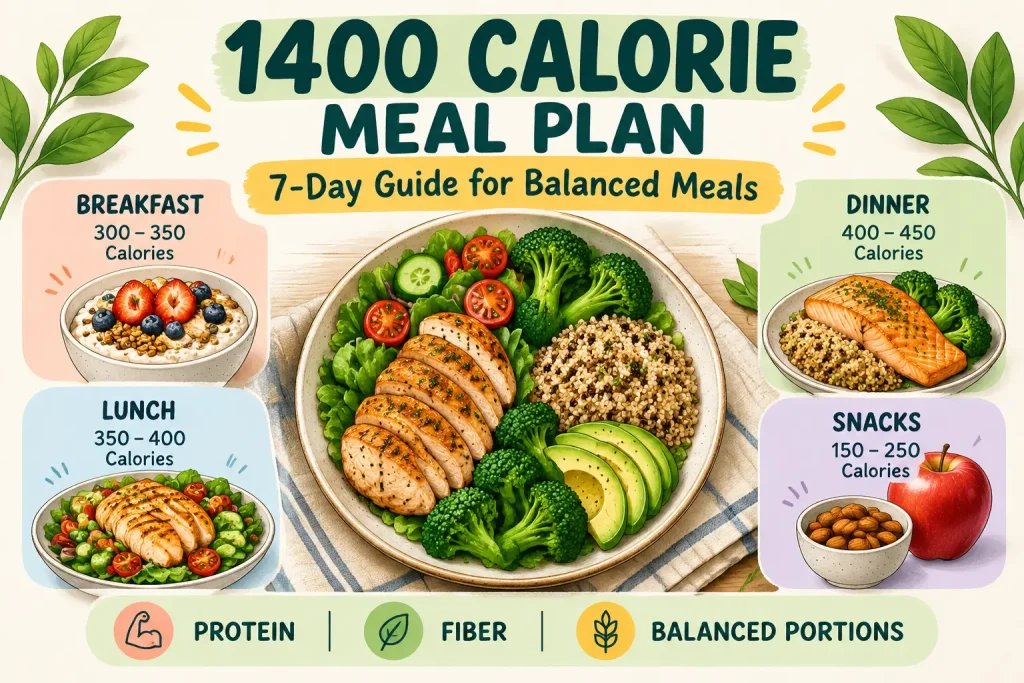
- Breakfast: 300 to 350 calories
- Lunch: 350 to 400 calories
- Dinner: 400 to 450 calories
- Snacks (1 to 2): 150 to 250 calories total
A high protein meal plan helps you stay fuller by including protein at every single meal. It helps you feel full for longer than carbs or fat alone. Try to include a protein source at breakfast, lunch, and dinner.
Fiber rich vegetables and whole grains matter too. They add volume to your meals without adding many calories. This combination helps meals feel more satisfying.
Healthy fats also deserve a place in this 1400 calorie menu plan. Small amounts of olive oil, avocado, or nuts slow down digestion. This helps a meal feel filling for longer.
Water plays a supporting role as well, even though it has no calories at all. Drinking enough water through the day supports digestion and energy. It also helps you tell the difference between real hunger and simple thirst.
7 Day 1400 Calorie Meal Plan for Healthy Weight Loss
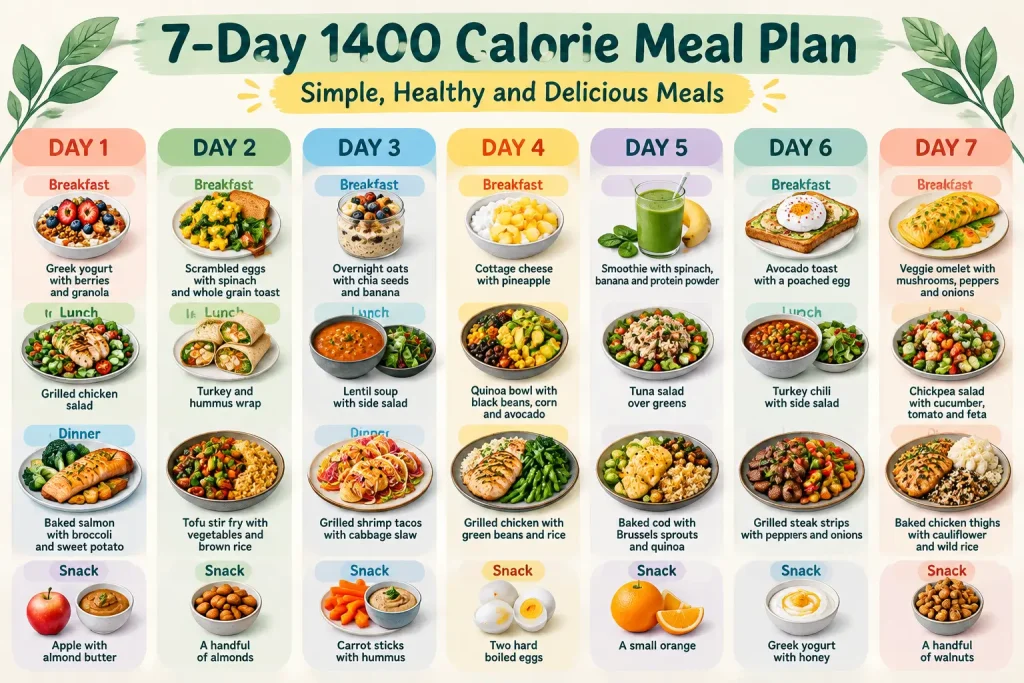
Day 1
Breakfast: Greek yogurt with berries and granola.
Lunch: Grilled chicken salad with mixed greens and vinaigrette.
Dinner: Baked salmon with roasted broccoli and a small sweet potato.
Snack: An apple with almond butter.
Day 2
Breakfast: Two scrambled eggs with spinach and a slice of whole grain toast.
Lunch: Turkey and hummus wrap with cucumber and tomato.
Dinner: Stir fried tofu with mixed vegetables over brown rice.
Snack: A small handful of almonds.
Day 3
Breakfast: Overnight oats with chia seeds and a sliced banana.
Lunch: Lentil soup with a side salad.
Dinner: Grilled shrimp tacos on corn tortillas with cabbage slaw.
Snack: Carrot sticks with two tablespoons of hummus.
Day 4
Breakfast: Cottage cheese with pineapple chunks.
Lunch: Quinoa bowl with black beans, corn, and avocado.
Dinner: Grilled chicken breast with steamed green beans and rice.
Snack: Two hard boiled eggs.
Day 5
Breakfast: Smoothie with spinach, banana, protein powder, and almond milk.
Lunch: Tuna salad over mixed greens with olive oil dressing.
Dinner: Baked cod with roasted Brussels sprouts and quinoa.
Snack: A small orange.
Day 6
Breakfast: Whole grain toast with mashed avocado and a poached egg.
Lunch: Turkey chili with a small side salad.
Dinner: Grilled steak strips with sauteed peppers and onions.
Snack: Greek yogurt with a small honey drizzle.
Day 7
Breakfast: Veggie omelet with mushrooms, peppers, and onions.
Lunch: Chickpea salad with cucumber, tomato, and feta.
Dinner: Baked chicken thighs with roasted cauliflower and wild rice.
Snack: A small handful of walnuts.
Every meal here can be swapped for something similar in calories. The structure matters more than the exact recipe on any given day.
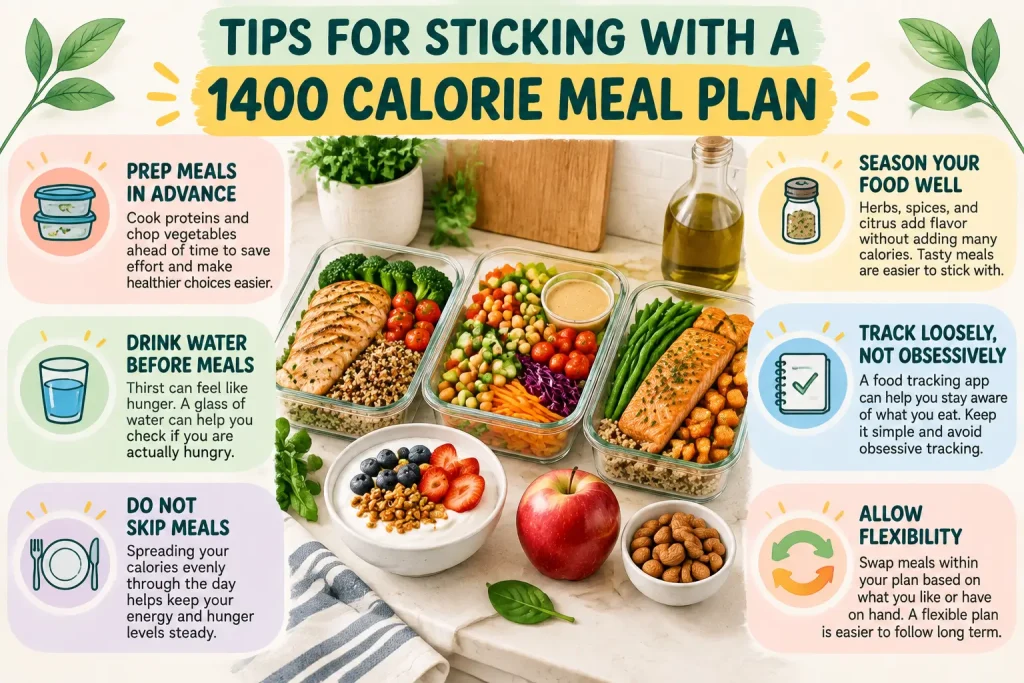
Tips for Sticking With a 1400 Calorie Plan
A 1400 calorie meal plan gets easier to follow with the right habits and preparation. Here is what tends to help people stay consistent over time.
Prep meals in advance. Cooking proteins and chopping vegetables ahead of time saves you effort later. It also lowers the temptation to grab something quick and less healthy.
Drink water before meals. Thirst often feels a lot like hunger. A glass of water beforehand can help you check if you are actually hungry.
Do not skip meals to save calories. Skipping breakfast often leads to overeating later in the day. Spreading calories evenly helps keep blood sugar and hunger steady.
Season your food well. Bland meals feel like a punishment and rarely last long term. Herbs, spices, and citrus add flavor without adding many calories.
Track loosely, not obsessively. A food tracking app can help you stay aware of what you eat. Obsessive tracking can create an unhealthy relationship with food, so keep it light.
Allow yourself flexibility. Swap meals within the plan based on what you like or what you already have on hand. A rigid plan with no room for choice rarely lasts.
Having variety in your meals also helps prevent boredom. Rotating your proteins and vegetables through the week keeps things interesting. A repetitive plan is hard to stick with past the first week.
Common Mistakes to Avoid
Cutting calories too aggressively. Going below 1200 calories without medical supervision is not safe for most people. It can slow your metabolism and lead to nutrient deficiencies over time.
Ignoring protein intake. Low protein meals leave you hungry faster than balanced ones. This often leads to overeating later in the day.
Relying on packaged diet foods. Many processed low calorie foods lack real nutrients. Whole foods tend to keep you fuller at the same calorie count.
Not adjusting for activity level. If you exercise heavily 1400 calories may not be enough fuel. Active people often need to eat more to support their workouts.
Expecting rapid results. Sustainable weight loss happens gradually, not overnight. Extreme calorie cutting usually backfires after a few weeks.
Comparing your plan to someone else’s. Everyone’s calorie needs and results are different. Staying consistent with your own plan matters more than comparing progress to others.
FAQ
Is a 1400-calorie meal plan safe for everyone?
No. It suits some people but not everyone. Check with a doctor before starting, especially if you are active or have any health conditions.
Will I lose weight on 1400 calories a day?
Many people do lose weight at this calorie level. Your results depend on your starting point, activity level, and how consistent you stay.
Can I customize this meal plan?
Yes. You can customize a 1400 calorie meal plan by swapping meals for similar foods with comparable calories.
Is 1400 calories enough protein for muscle maintenance?
It can be, if protein is prioritized at every meal. Aim for at least 20 to 30 grams of protein at each meal.
What if I feel hungry all the time on this plan?
Constant hunger is a sign to reassess your calorie intake. Talk to a healthcare provider about adjusting your calories upward.
The Bottom Line
A low calorie meal plan like this one can work well for the right person with the right guidance. Focus on protein, fiber, and balanced meals through the day. Consistency matters more than perfection here.
Always check with a healthcare provider before starting a restrictive plan. Everyone’s calorie needs are different, and that is completely normal.
Small and sustainable changes tend to outlast dramatic overhauls. A plan you can realistically follow beats a perfect plan you abandon after a week.
This article is for general information and is not a substitute for advice from a doctor or registered dietitian. Please consult a healthcare provider before starting any calorie restricted eating plan.