How Affiliate Marketing Works: A Simple Beginner’s Guide
You tell a mate about a great pizza place. They go. They love it. They spend a fortune on garlic bread. The pizza place wins, your mate’s happy, and you? You get nothing. Bit unfair when you think about it.
Now picture the same thing, except the pizza place slips you a fiver every time someone shows up because of you. That’s affiliate marketing, basically. You send people toward stuff, they buy, you get a slice. The internet just makes the whole thing trackable.
It’s one of the most common ways normal people earn online. Not a scam, not a secret. So let me walk you through how affiliate marketing works, minus the hype. Where the money comes from, who hands it over, and how a total beginner actually gets going.
The numbers back this up. US spending on the system hit $10.72 billion in 2024, and it’s forecast to reach $12 billion by 2025 (Statista). This isn’t fringe, it’s mainstream.
What Is Affiliate Marketing, in Plain English?
Strip the jargon and it’s dead simple. You promote someone else’s product. A sale happens because of you, you earn a commission. That’s the engine. That’s the whole thing.
No product to make. No boxes to ship, no stock in your spare room, no angry refund emails. None of that mess lands on you. Your one job? Match the right person to the right product, and pocket a cut when they buy.
You’re a middleman, but the useful kind. Shops want customers. Customers want a decent recommendation they can trust. You stand in the gap, put the two together, and take a small fee for the trouble. Done properly, nobody loses.
How Affiliate Marketing Works, Step by Step
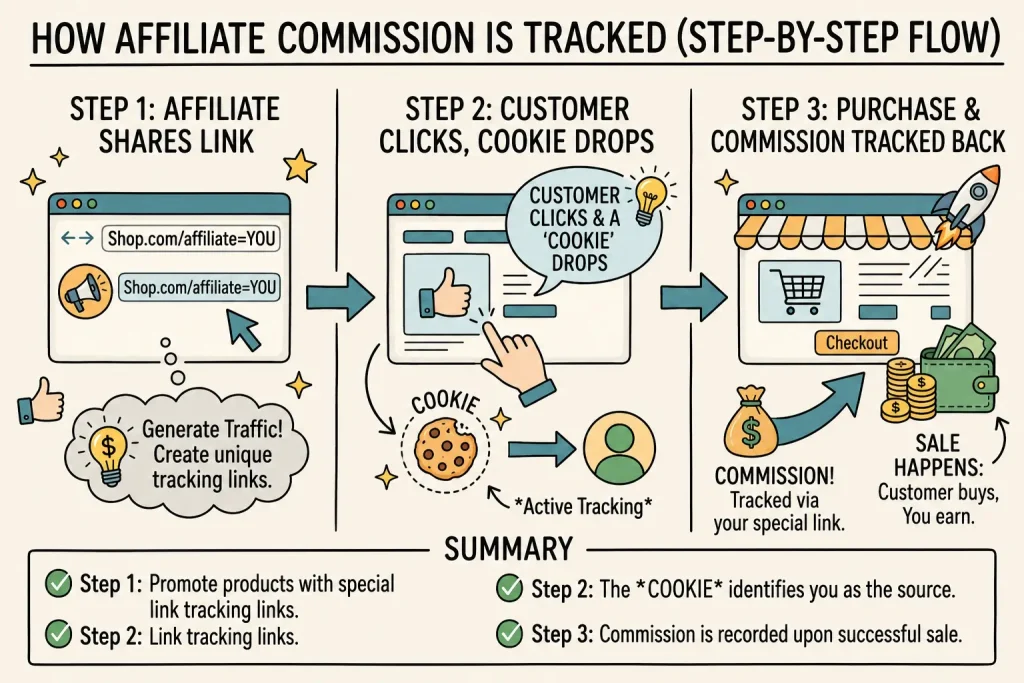
So how does this method work under the hood? One thing: a tracking link. It’s yours. Nobody else has that exact one.
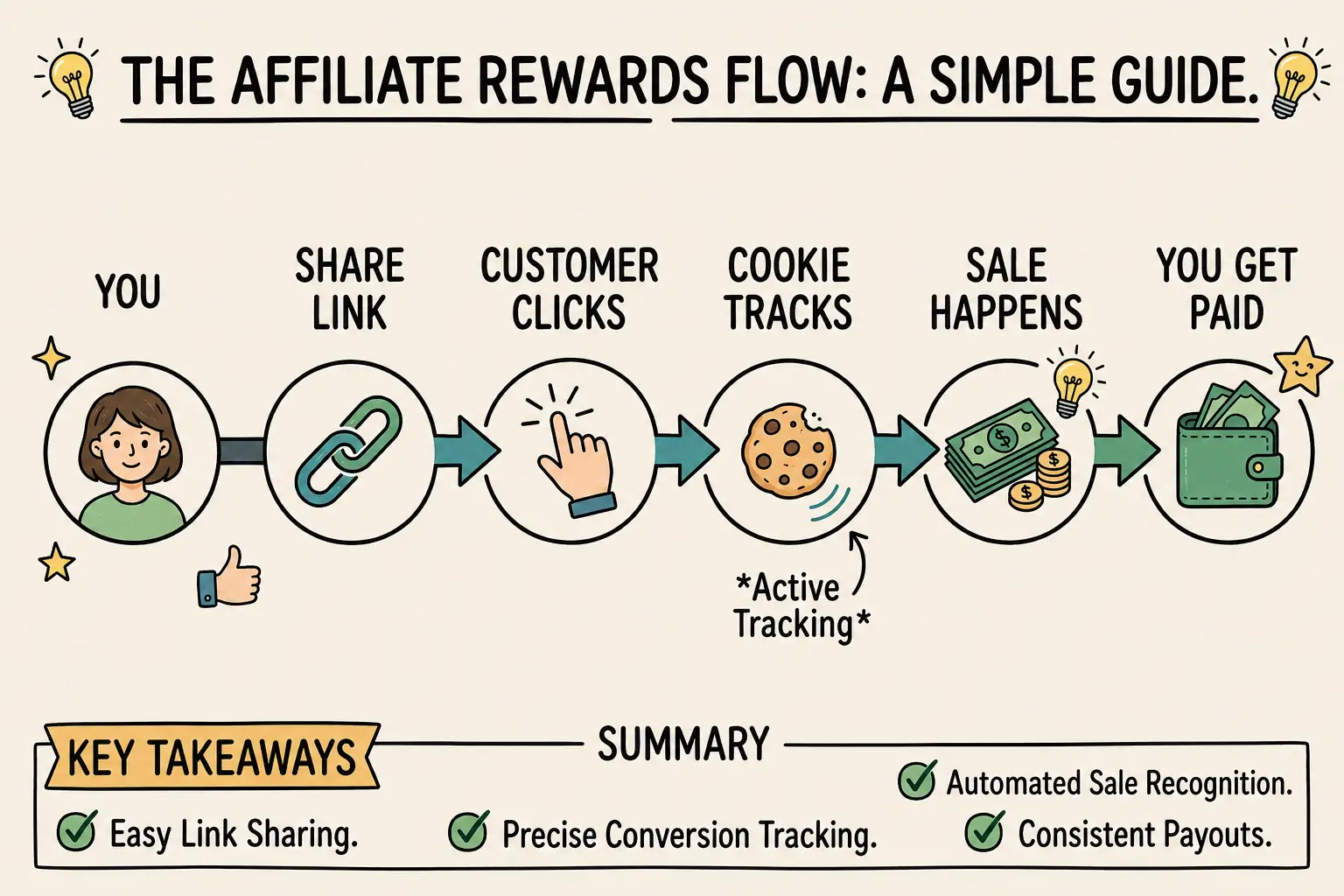
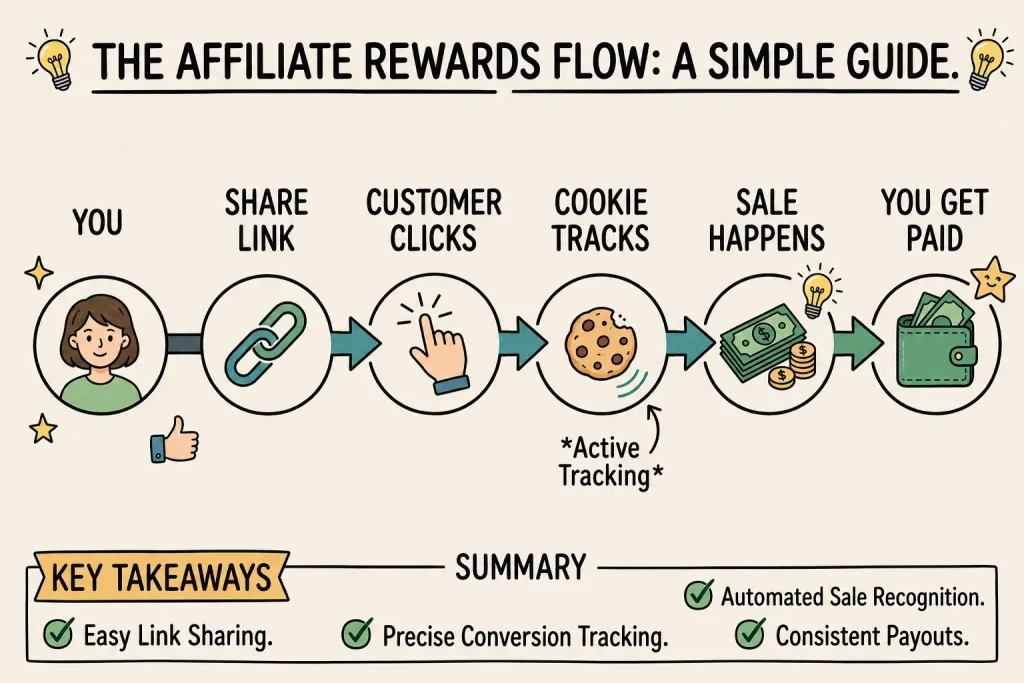
Here’s the whole flow:
- You join a program. A company hands you a unique affiliate link.
- You share it. Blog, YouTube video, an Instagram post, wherever your people are.
- Someone clicks. The link quietly tags their device (a cookie), so any sale points back to you.
- They buy. Might be right then. Might be next week. Most programs give you a window.
- You get paid. The company sees the sale came from your link and sends your cut.
The tracking is the clever bit. It’s how a company on the other side of the planet knows the customer came from you, someone they’ve never met and never will.
Who Actually Pays You
Fair thing to ask. The money’s got to come from somewhere real.
The seller pays you. Not the customer. And here’s the nice part, your buyer pays the exact same price either way. Your commission comes out of the company’s pocket, filed under marketing. They’d have spent that money on ads anyway. Paying you is often cheaper, so they’re happy to.
Tonnes of big names run these. Amazon’s affiliate program, Amazon Associates, is the famous one, and heaps of ordinary folks earn through it daily. But it’s nowhere near the only game. Software firms, course creators, clothing shops, tool brands, web hosts. Nearly every online business has a version now.
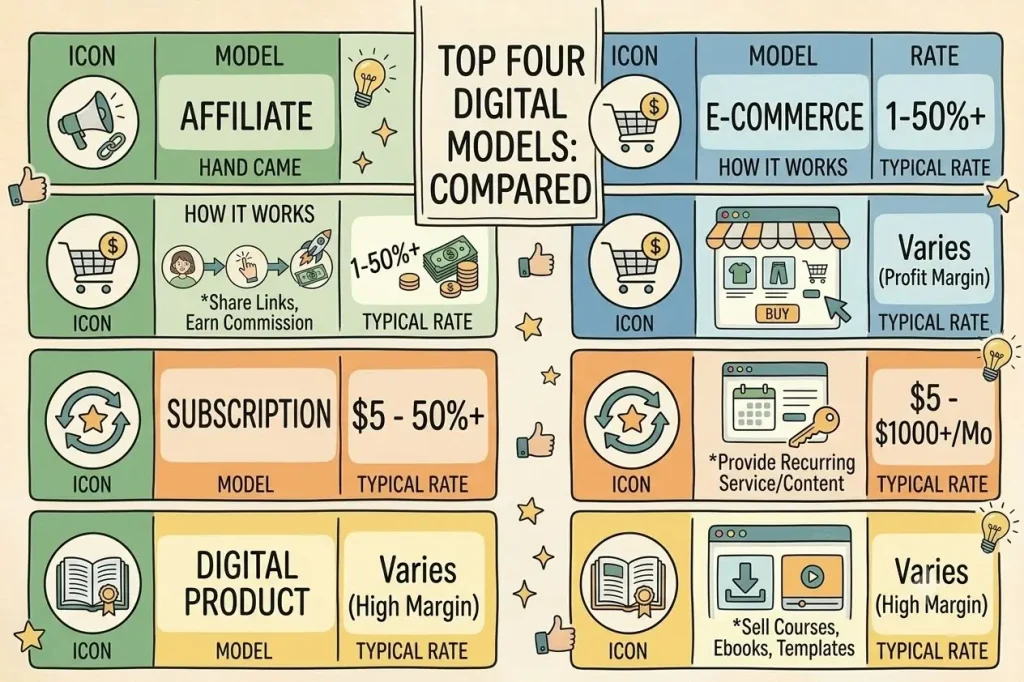
How Affiliates Get Paid: 4 Models
| Model | How It Works | Typical Rate |
|---|---|---|
| Pay Per Sale (PPS) | Earn when someone buys through your link | 5-50% |
| Pay Per Lead (PPL) | Earn for sign-ups, form fills, trials | $1-$50 per lead |
| Pay Per Click (PPC) | Earn per click to merchant site | $0.05-$2 per click |
| Pay Per Install (PPI) | Earn when app/software is installed | $0.50-$5 per install |
Where Do You Share Your Affiliate Links?
You’ve got a link. Now what? This stumps beginners more than anything, so let’s sort it.
A blog is the classic home. You write a helpful review, or a “best gear for X” post, and the links live inside it naturally. Someone searches, lands on your page, reads, clicks. Best part? It keeps working for years after you publish. Set it and (mostly) forget it.
Video’s huge too. A YouTube review, links in the description. TikTok and Instagram work, though links are fiddlier there. And email, honestly one of the strongest of the lot, because those people already chose to hear from you.
But the rule underneath never changes. Drop the link where it genuinely helps someone. Not where you’re just spraying it around. A link inside a post that actually answers a question? That converts. The same link flung at random strangers? Ignored. Or worse, it annoys them. Context does all the heavy lifting.
Partner Marketing Earnings: What Beginners Can Expect
Straight talk, because plenty of guides dodge this. You’re not making a fortune in week one. Sorry.
Commissions are all over the place. Some pay 3%, some 5%, some hand you 30% or 50%, especially on digital stuff like courses and software. Cheap product, tiny cut, you’ll need buckets of sales. One solid high-ticket item can beat a hundred cheap ones from a single sale. So what you promote matters just as much as how hard.
Early days? Probably crickets. That’s normal, don’t panic. It creeps up as your audience grows and starts trusting you. The people quietly banking real money spent months, sometimes years, building an audience first. Slow burn, not lottery ticket. Anyone selling you the lottery version is usually selling a course.
What Makes a Good Affiliate Program?
Not every program deserves your time. Worth being a bit fussy before you sign anything.
Decent commission, obviously. But don’t stop there. Check the cookie window, that’s how long after a click you still get credited. One day is stingy. Thirty or sixty is generous, and it means you get paid for sales that take a while to land. Peek at how they pay out too. Some sit on your money for ages, or make you hit a fat minimum before they’ll release a penny.
Then the product itself, which matters most. Promote something genuinely good and sales come easy, because you’re not twisting arms to shift junk. Promote something you’d never touch yourself? People feel it. Every time. The best programs are the ones where you’d recommend the thing even without a commission. That’s the sweet spot. Hold out for it.
How a Beginner Can Actually Start
Good news for this setup: the entry cost is basically nothing. No big investment, no warehouse, no staff, no risk.
Sane way in? Pick a topic you actually know or care about. Fitness, tech, budgeting, houseplants, whatever. Build a small home for it, a blog or a social account, where you help people and talk about it. Once even a tiny audience trusts you, join a program that fits and start recommending stuff you’d genuinely vouch for.
That last line is the whole game, really. Push rubbish for a quick buck and people clock it instantly. Recommend genuinely useful things and the commissions follow, because trust is what actually converts, not hype. Still weighing up whether it’s even a real income path? Our honest take in Is this system Legit? is a good next read.
This article is for general information only and isn’t professional financial advice. Earnings from affiliate marketing vary a lot and aren’t guaranteed. Do your own research before relying on it for income.
FAQ
How does affiliate marketing work for total beginners?
You join a program, grab your link, share it with people who’d find the product handy, and earn a cut when they buy through it. No product of your own required. The mechanics are easy. The hard bit is building an audience that trusts what you say.
Do I need money to start affiliate marketing?
Barely any. A free social account or a cheap blog will do. What it really costs you is time. Learning your topic, making content, growing an audience bit by bit. That’s the real price, not cash up front.
Is affiliate marketing the same as a pyramid scheme?
Nope. Big difference, too. You earn from actual product sales, not from recruiting people under you. No downline, no fee to join and profit from. Just a commission for sending a real customer. Totally different beast.
How long until I make money?
Longer than you’d like, honestly. For most people it’s months of building before the money means anything. A lucky few move faster. Treat it as a slow build, though. If you need cash this week, look elsewhere, this won’t do it.
What can I promote as an affiliate?
Almost anything sold online. Physical products, software, courses, subscriptions, tools, you name it. Best pick? Something you actually get, and would happily recommend to a friend, in a niche you like talking about. Genuine interest holds up way longer than chasing whatever pays most.
Final Thoughts
So that’s how affiliate marketing works, no hype attached. You connect people to stuff they’d like, a tracking link ties the sale to you, and the seller pays your cut. Simple idea. Genuinely real. Just not a magic money button.
Sound like your thing? Start small. Pick a topic, help people, only recommend what you actually believe in. The trust you build now is the thing that pays you later. Go join one program this week and see how it feels. Every affiliate started with a single first click.